Best Time to Go Parasailing in St. Thomas: Month-by-Month Guide

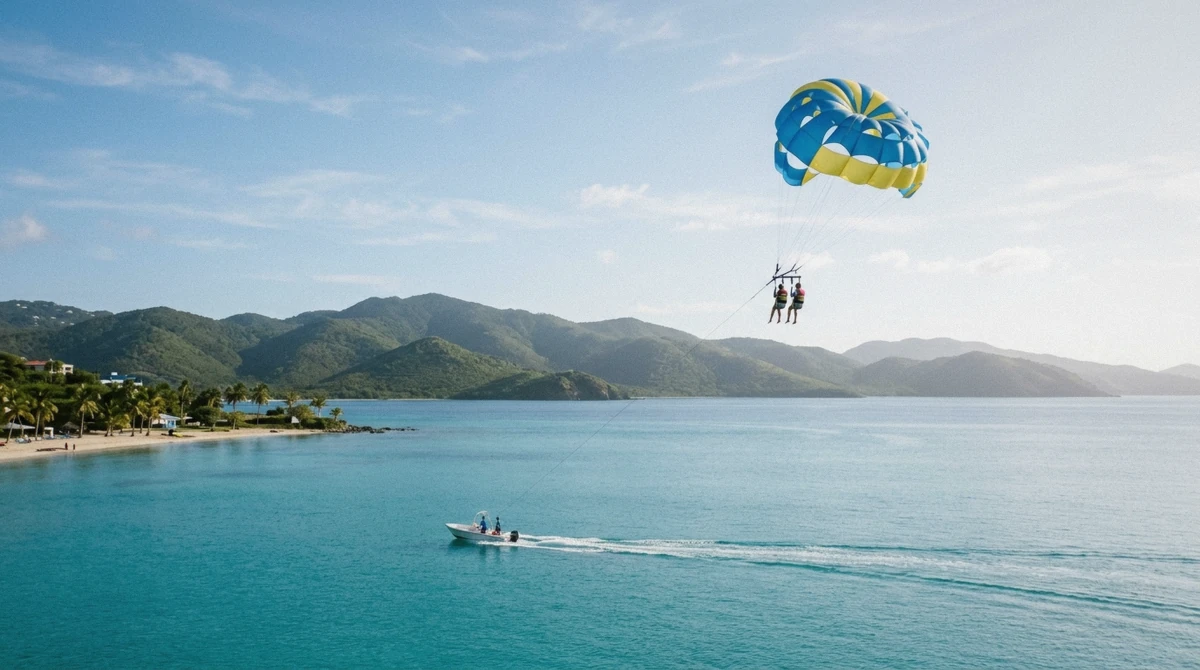
The best time to go parasailing in St. Thomas is May through June, when the trade winds sit at their calmest and Pillsbury Sound rarely produces a wind hold. December through April runs a close second on conditions but stacks cruise-ship crowds onto every East End marina, and September through November is the month range to watch closely, cheap and quiet but carrying the year's highest odds of a weather cancellation. Whatever window you land in, a captain who cancels for wind rather than flies anyway is doing the job right, and I've never seen a flight held for rain alone.
Quick answer
May and June give the calmest trade winds of the year for parasailing in St. Thomas, with the lowest odds of a wind hold and warm water already in the low 80s Fahrenheit. December through April flies almost as reliably but crowds the East End with cruise-ship traffic, and September through November is the cheapest, quietest stretch but also the riskiest for a cancelled flight.
Key takeaways
- Best window: May and June, calm wind and thin crowds
- Runner-up: December to April, reliable wind but multi-ship crowding at Sapphire Beach and Havensight
- Window to watch: September to November, cheapest fares but the highest cancellation odds of the year
- Wind decides a flight, not rain: Caribbean showers pass in minutes and rarely ground a boat
- Morning slots fly more often than afternoon ones, before the trade winds build
- The Christmas Winds in December and January are the classic reason a winter flight gets held
The Year Over Pillsbury Sound at a Glance
Read the Verdict column as the short answer for that stretch of the calendar, then check the sections below for the reasoning behind it.
| Season (Months) | Weather | Sea & Wind | Crowds | Verdict |
|---|---|---|---|---|
| December to April | Warm, dry, trade winds steady | Choppier chop from Christmas Winds in Dec-Jan, settles by March | High, cruise high season | Reliable wind, busiest marinas |
| May to June | Warm, drier air, calmest wind of the year | Flattest water and lightest trade winds | Moderate, shoulder season | Best overall |
| July to August | Hot, humid, afternoon trade winds pick up | Flyable most mornings, watch afternoon gusts | Moderate to high, family summer travel | Good, book mornings |
| September to November | Hottest, hurricane season peak Aug-Oct tail | Most storm-affected stretch, highest hold odds | Low, cheapest fares | Cheapest seats, highest cancellation odds |
No two stretches on that table share a verdict, and the trade-off is consistent across all four: the calmer and cheaper the window, the more you give up on either crowd size or wind reliability.
December to April: High Season, Christmas Winds and Full Boats
Dry season runs December through May, and the first four months of that stretch are the busiest on the water. Cruise high season runs October through April, and December through April is when it peaks hardest, with multi-ship days sending several thousand passengers through Havensight and Crown Bay at once. Sapphire Beach Marina books out its morning slots first on those days, and I've watched walk-up flyers turn away by 10am when three ships are in.
The Christmas Winds, a trade-wind surge that builds through December and January, are the classic reason a winter flight gets held for an hour or two rather than cancelled outright. By March the wind eases and April closes out the season as the most reliable month in this stretch, right before VI Carnival in late April spikes local bookings on top of the tourist traffic.
- Cruise high season October to April, with December to April the peak crowd window
- Christmas Winds in December and January are the year's most named reason for a wind hold
- March and April settle down and fly more reliably than the December-January stretch
- VI Carnival in late April adds local demand on top of the season's tourist crowds
May to June: The Calm-Water Sweet Spot
May and June sit in the gap between the dry season's crowds and hurricane season's storm risk, and it shows on the water. The trade winds that push Pillsbury Sound into chop most of the year drop to their calmest reading of the calendar, water temperature is already climbing toward its late-summer high, and the marina at Sapphire Beach runs closer to half-full than packed. Cruise traffic thins noticeably after the April rush, so a walk-up flyer has a real shot at an afternoon slot without booking a week ahead.
If a captain tells you a flight looks marginal in May or June, that's worth taking seriously precisely because it happens so rarely in this window.
- Calmest trade winds of the entire year
- Water already warm, low 80s Fahrenheit
- Cruise crowds thin out after the April Carnival rush
- Lowest odds of a wind hold of any two-month stretch
July to August: Hot, Flyable, Watch the Forecast
July and August bring the year's hottest air, with highs sitting in the upper 80s to 90 Fahrenheit most days, but the flying itself stays solid through the morning. Afternoon trade winds build more noticeably than in May or June, so a boat scheduled for 8am or 9am usually gets flatter water than one scheduled for 2pm. Family summer travel keeps the marinas moderately busy without the multi-ship crush of the winter cruise season, and this is also the leading edge of hurricane season, which runs June 1 through November 30 and peaks mid-August through October.
A named storm is still the exception rather than the rule in early August, but it's the point in the calendar where checking the forecast a few days out starts to matter.
- Hottest air of the year, upper 80s to 90 Fahrenheit
- Mornings fly calmer than afternoons as trade winds build through the day
- Hurricane season begins June 1, with the real risk window opening mid-August
- Family summer crowds fill marinas moderately, well short of winter's multi-ship days
September to November: Cheapest Seats, Highest Cancellation Odds
This is the quiet stretch of the St. Thomas calendar, and operators price it that way; the full price breakdown shows how far the low season pulls fares down. Cruise traffic drops to its lowest point of the year, hotel occupancy falls, and a flyer who shows up without a reservation has the best odds all year of getting a boat to themselves. The trade-off is real: hurricane season peaks from mid-August through October, and this three-month window carries the highest odds of a weather-related hold or cancellation of any stretch on the calendar.
I still fly plenty of trips in October, most weeks pass without incident, but I tell anyone booking September through November to build a spare morning into the trip if the flight matters to them.
- Cheapest fares and thinnest crowds of the year
- Hurricane season peak sits mid-August through October
- Highest weather-cancellation odds of any three-month stretch
- Worth a spare morning in the itinerary if the date is fixed
Wind Decides, Not Rain
Most first-time flyers assume a rainy forecast means a cancelled flight. It's actually sustained wind, not rain, that grounds a boat. Caribbean showers here are short and localized, most pass over Pillsbury Sound in a matter of minutes, and a captain will often just wait one out at the dock rather than call the trip.
What actually pulls a flight is the wind speed reading, since a chute that flies fine in a light breeze becomes unpredictable to launch and land once gusts pick up past the captain's comfort threshold. That's also why the daily call is made boat by boat rather than island-wide: two crews watching the same grey sky can make opposite calls depending on how the gusts are actually reading at their own slip. A crew that holds a marginal flight is showing you its safety culture; our safety and restrictions guide explains why that judgment matters more here than any statute.
- Sustained wind speed, not rain, is what grounds a parasail boat
- Showers over Pillsbury Sound typically pass in minutes
- The daily fly/no-fly call is the captain's, made boat by boat
- A grey sky with light wind is more flyable than a clear one with gusts
Monthly Water and Air Temperatures
Air highs sit in a narrow band nearly all year, typical figures below; treat every number as a seasonal average and check the current forecast close to your dates.
| Month | Air High | Water Temp | Rain Signal |
|---|---|---|---|
| January | 85°F (29°C) | 79°F (26°C) | Low, dry season |
| February | 86°F (30°C) | 79°F (26°C) | Low, dry season |
| March | 87°F (31°C) | 80°F (27°C) | Low |
| April | 88°F (31°C) | 81°F (27°C) | Low |
| May | 89°F (32°C) | 82°F (28°C) | Low to moderate |
| June | 90°F (32°C) | 83°F (28°C) | Moderate, hurricane season opens |
| July | 90°F (32°C) | 84°F (29°C) | Moderate |
| August | 90°F (32°C) | 84°F (29°C) | Moderate to high, peak season begins |
| September | 89°F (32°C) | 84°F (29°C) | High, hurricane peak |
| October | 88°F (31°C) | 83°F (28°C) | High, hurricane peak |
| November | 87°F (31°C) | 82°F (28°C) | Moderate, hurricane season closes |
| December | 86°F (30°C) | 80°F (27°C) | Low, Christmas Winds build |
Water swings from about 79°F (26°C) in winter to 84°F (29°C) in late summer, while air highs sit at 85-90°F (29-32°C) essentially year-round, so the temperature never really rules a month out. Figures are typical seasonal averages in line with National Weather Service San Juan data for the U.S. Virgin Islands; check the current forecast close to your dates.
Morning Flights and Multi-Ship Days
Booking early in the day does double duty here. Morning slots fly before the trade winds build in the afternoon, so an 8am or 9am boat has better odds of flat water than a 3pm one regardless of the month. Morning slots also beat the crowd math on cruise days, since a multi-ship day at Havensight and Crown Bay sends the bulk of shore excursions out between 9am and noon, and Sapphire Beach Marina fills its afternoon flights first when three ships are in port.
If a port day and a fixed schedule are part of your plan rather than a flexible island stay, the logistics of fitting a flight around a ship's clock are their own subject; see parasailing in St. Thomas on a cruise day for the full timeline.
- Morning slots consistently fly calmer than afternoon ones
- Multi-ship days push the heaviest shore-excursion traffic between 9am and noon
- Booking the first boat of the day dodges both the wind build and the crowd crush
- Cruise passengers on a fixed clock should plan the flight around the ship, not the other way around
Best Window by Traveler Type
If a photographer chasing calm water and clear light
aim for May or June, when the trade winds sit at their flattest and the water reads a deep, even turquoise.
If traveling with kids
book March or April, dry-season conditions without the December-January Christmas Winds that add an extra hold or two.
If flying for the first time and nervous about a cancellation
come in May or June, the two months with the lowest odds of a wind hold on the whole calendar.
If on a fixed budget chasing the cheapest fare
book September through November, but build a spare morning into the trip given the higher weather-cancellation odds.
If arriving on a cruise ship with a hard sailaway time
book the first morning slot available and read the cruise-day logistics before you lock the date.
If Your Flight Gets Weather-Held
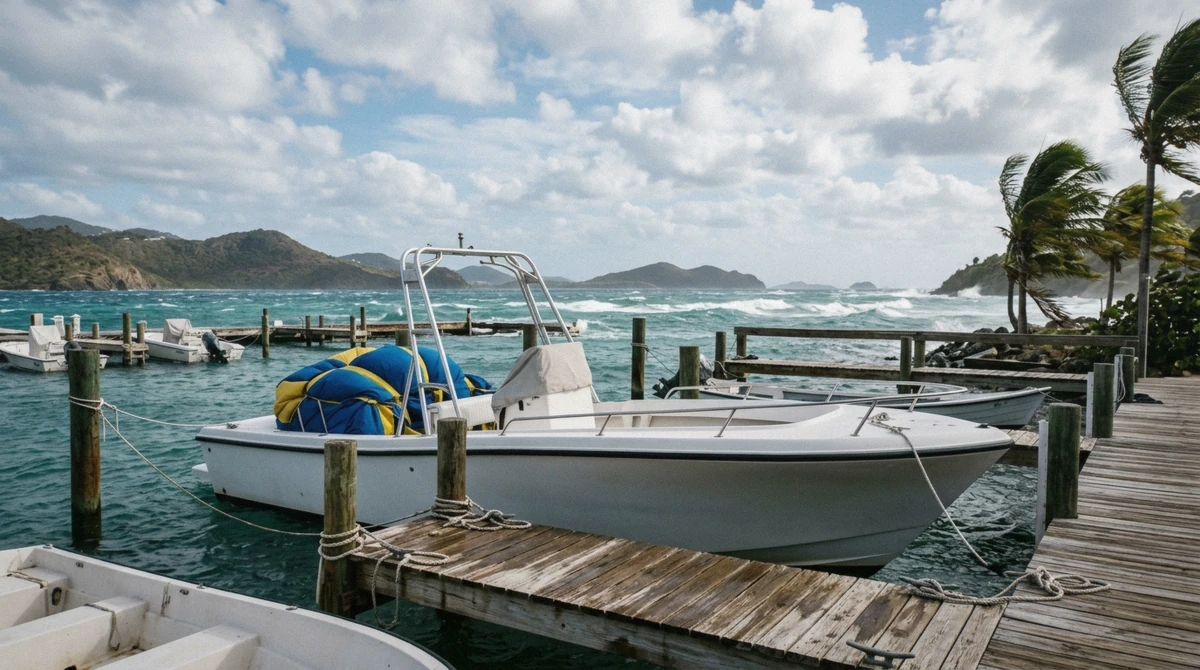
A wind hold is a delay, not a cancelled trip, most of the time. Crews will often push a flight back an hour or two and watch the forecast rather than call it off outright, especially on a day with scattered gusts that could ease by mid-morning. If the captain does cancel for weather, the standard terms are straightforward: a weather cancellation means a free rebook or a full refund, no argument needed on either side.
That protection only covers weather; a self-cancellation inside 24 hours of the flight is charged in full regardless of the reason, so keep that 24-hour line in mind when you're deciding whether to hold your reservation through a shaky forecast.
So, Which Month Gets Your Flight?
If calm water and thin crowds matter most, book May or June, the two most reliable months on the St. Thomas calendar. December through April flies almost as well and suits anyone who wants dry-season certainty, as long as you're prepared to share the marina with cruise-ship traffic on multi-ship days. September through November is the honest budget pick, cheapest fares of the year, but plan for the possibility of a wind hold given the hurricane-season peak running through October.
Still weighing whether the flight itself earns its price in any month? Our worth-it verdict settles that side first. Whatever month you land in, flying over St. Thomas rewards an early booking and a morning slot more than it rewards chasing any single perfect week, and the Sapphire Beach flight card is the place to lock both in.
Frequently Asked Questions
What is the best month for parasailing in St. Thomas?
May and June, when the trade winds sit at their calmest and the water is already warm. December through April is a close second on reliability but comes with heavier cruise-ship crowds.
Is parasailing in St. Thomas good during hurricane season?
Yes, with the right expectations. Hurricane season runs June through November, and most weeks in June and July fly without incident. The real risk window is mid-August through October, when a spare morning in your itinerary is worth planning for.
Does it get cold enough in winter to skip parasailing?
No. Air highs sit at 85-90°F (29-32°C) essentially year-round and water never drops below about 79°F (26°C), even at winter's coolest. Wind, not temperature, is what decides a winter flight.
What are the Christmas Winds and do they cancel flights?
The Christmas Winds are a trade-wind surge that builds through December and January. They're the most common reason a winter flight gets held for an hour or two rather than flown at the scheduled time, though outright cancellations are still the exception.
Is morning or afternoon better for parasailing in St. Thomas?
Morning, in every season. Trade winds build through the day, so an 8am or 9am boat consistently sees flatter water than one scheduled for the afternoon.
When are St. Thomas parasailing prices lowest?
September through November, the island's quietest and cheapest stretch. It also carries the highest odds of a weather hold of any three-month window, so weigh the savings against that risk.
Does rain cancel a parasailing flight in St. Thomas?
Almost never on its own. Caribbean showers over Pillsbury Sound typically pass in minutes. Sustained wind is what actually grounds a boat, not a passing rain cell.